Read time:
4 mins
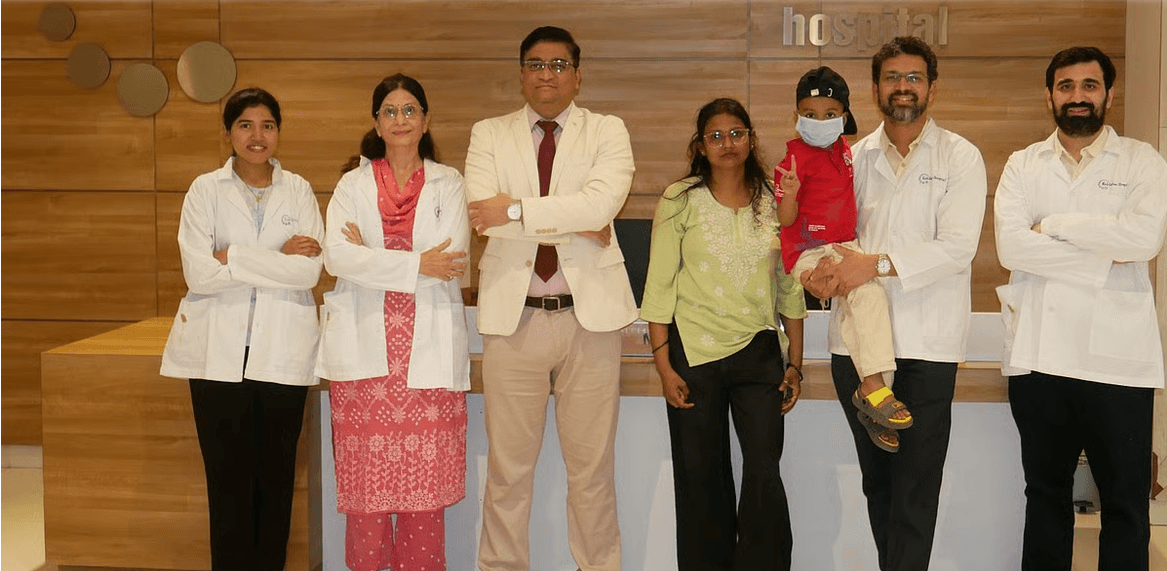
A five-year-old boy from Ranchi, who had experienced a relapse of high-risk leukemia and had subsequently been placed on palliative care, has achieved remission following an intensive treatment journey at Kokilaben Dhirubhai Ambani Hospital, Navi Mumbai.
His treatment combined targeted immunotherapy to bring the leukemia under control, followed by a haploidentical bone marrow transplant using a half-matched family donor. The case was managed by a multidisciplinary team led by Consultant Haemato-oncologist Dr. Kunal Goyal, with support from paediatric, transplant, cellular therapy and critical care specialists. Free Press Journal
A high-risk leukemia diagnosis
The child was initially brought for medical evaluation after his parents noticed bruising on his legs and swelling in his neck. Investigations led to a diagnosis of Philadelphia chromosome-positive B-cell acute lymphoblastic leukemia (B-ALL), a high-risk form of childhood blood cancer.
His investigations also identified an IKZF1 mutation and monosomy 7, genetic abnormalities that were reported as being associated with poorer outcomes. Free Press Journal
He underwent several rounds of treatment at hospitals elsewhere, including chemotherapy, targeted medicines and radiation to the brain. Despite prolonged treatment, traces of the leukemia persisted. He was subsequently given more intensive treatment before being placed on maintenance chemotherapy.
After approximately six months of maintenance treatment, his blood counts fell sharply. A bone marrow examination confirmed that the leukemia had returned.
With the disease proving difficult to control, the child was placed on palliative care.
Seeking another treatment option
His parents continued to seek treatment options and eventually brought him to Kokilaben Dhirubhai Ambani Hospital, Navi Mumbai, where he came under the care of Dr. Kunal Goyal, Consultant Haemato-oncologist, BMT and Cellular Therapies (CAR-T).
The medical team adopted a treatment strategy aimed at first reducing the leukemia to a level at which a transplant could be considered.
The child received targeted immunotherapy, which brought the detectable level of leukemia down to nearly undetectable levels. This response enabled the team to proceed with a haploidentical bone marrow transplant. Press Network of India
Haploidentical transplant using a half-matched family donor
The child subsequently underwent a haploidentical bone marrow transplant.
A haploidentical transplant is an allogeneic stem cell transplant in which the donor is only partially matched to the recipient. A parent or another close family member can often serve as a half-matched donor, providing an option when a fully matched donor is not available.
In this case, stem cells from a half-matched family member were used after immunotherapy had brought the leukemia under control. Global News On Network
A challenging recovery
The transplant was followed by a complex recovery period.
The child developed high fever associated with his weakened immune system and also experienced a severe allergic reaction to a blood transfusion. His recovery was further complicated by respiratory distress and gut infections.
These complications required close monitoring and treatment by the paediatric and haematology transplant teams. The multidisciplinary approach extended from the bone marrow transplant unit to critical care, helping manage the complications during the post-transplant period. Press Network of India
The child eventually recovered and was able to return home.
The role of multidisciplinary care
Dr. Kunal Goyal said that the child's treatment required coordinated efforts across the multidisciplinary team, particularly in achieving remission with immunotherapy and subsequently taking him safely through the haploidentical transplant. Global News On Network
Dr. Shilpa Aroskar, Head of Pediatrics and Neonatology, highlighted the importance of collaboration between paediatric and haematology transplant teams in managing complex childhood leukemia cases, including those requiring advanced therapies and transplantation. Press Network of India
The case involved expertise across multiple areas, including paediatric oncology, haemato-oncology, bone marrow transplantation, cellular therapies and critical care.
From relapse to remission
The child's journey involved multiple stages of treatment, beginning with conventional chemotherapy and targeted therapies, followed by relapse, targeted immunotherapy and ultimately a haploidentical bone marrow transplant.
For a child with relapsed high-risk leukemia, achieving sufficient disease control before transplantation can be an important part of the treatment strategy. In this case, targeted immunotherapy helped reduce the detectable leukemia to nearly undetectable levels before the transplant was undertaken. Free Press Journal
Following the transplant, the medical team managed several serious complications, after which the child recovered and returned home.
Nave Shahar reported the child as having been declared cancer-free following treatment, while the English-language reports describe him as being in remission. Nave Shahar
A complex childhood leukemia case successfully managed in Navi Mumbai
This case illustrates the increasingly specialised treatment pathways available for children with relapsed or high-risk leukemia. Depending on the individual disease characteristics and clinical circumstances, treatment may involve combinations of chemotherapy, targeted therapy, immunotherapy, cellular therapies and stem cell transplantation.
It also highlights the importance of coordinated multidisciplinary care. In this case, achieving disease control was followed by a haploidentical transplant and intensive management of post-transplant complications.
The child has since recovered and returned home, marking an important milestone following a prolonged and challenging treatment journey. Global News On Network
Media coverage
The case has been reported across multiple news platforms, including:
Read at Free Press Journal
Read at Press Network of India
Read at Global News On Network
Read at Nave Shahar